
OCD is the toxic friend that’s so hard to get rid of because it convinces you it knows your deepest, darkest secrets, and that it’s protecting you and your loved ones from an unsafe world.
In 2023 the GP referred me for a health condition and I had to fill in some paperwork before seeing the consultant. It was a stressful time and I sat frozen, at my desk, unable to send in the forms, questioning what I’d written, checking and rechecking. The upshot was that when the consultant discharged me in 2024, as an aside he told the GP that I needed a referral for OCD treatment.
Finally I started to gain more understanding of the way my life had been.
I suffered from OCD from being a small child. My OCD is in the form of either thinking I’ve done something bad – or feeling I need to behave in a way to prevent something bad happening. The number 4 became very important to me. If I did things 4 times I could magically prevent harm coming to me or my family. I felt I carried that responsibility.
When I was eleven I went to stay with an aunt for a few days. Years later I found out that she’d rung my mum whilst I was there, and asked if I was okay as I stayed in the bathroom so long every night. At the time I was splashing the taps with water 4 times to prevent anything bad happening. Then I decided 4 X 4 would be even safer, so had to perfectly splash them 16 times. Except it’s never quite that simple. You have to do it *just right*.
At certain points of my life, including an episode at high school, OCD told me big lies, accusing me of having done something irreprehensible. Its intrusive voice persuades you that you’ve behaved terribly, even if you know, deep down, that you haven’t. It’s insidious and compelling, it makes you constantly question yourself. “Yes, but what if you did it? What a BAD person you must be.”
These episodes were harrowing, the anxiety about them lasting for years in some cases, and it blew my mind when, all these decades later, I finally had an explanation.
Now I’ve had OCD treatment. Not a full course. I’ve got too much going on in my life, currently, to have the headspace to deal with the deeper aspects. So we started with the more external *physical* issues I had – checking switches, windows, the hob, especially at night before going to bed.
OCD treatment is about the consequences and the evidence. The consequences of not doing my routines, in my view, were a house fire, a burglar breaking in, my family or myself dying or being murdered. So my therapist said let’s look at the evidence for that: How long have you been living where you are? 20 years. How many houses are there in your road? About 15. How many of the owners of those houses do you think check switches as thoroughly as you do? None. Most probably don’t even bother. And how many house fires have there been in the last 20 years in your road?
ZERO.
In other words, there is no evidence for my concerns, no proof that my rituals made a difference – and that’s what I worked with.
It wasn’t easy, lying in bed at night, forcing myself not to go down and check again, worried for the safety of my loved ones, imagining the worst scenarios, that voice telling me that I WOULD BE TO BLAME if something happened. But the more I did that, the more the evidence built up that my worries were unwarranted, the less I listened to the OCD voice, the less power it had over me. My physical OCD routines are SO much less rigid now. I still can’t quite believe it.
Writing and posting letters and cards has always been difficult, me continually opening them up to check I haven’t written anything offensive. Sounds ridiculous doesn’t it? Funny, even? But OCD is destructive. It eats away at time, at self-esteem, at all logic; it affects sleep, it causes stress and anxiety, it worsens other mental health conditions; it affects relationships because other people don’t understand your behaviour.
OCD controls you and encourages you to seek control.
“I’m a little OCD” is a phrase that gets banded about. But if you colour-coordinate your bookshelves and the consequences of not doing so would be that they won’t look as nice… that’s different to the consequences being that some life-changing trauma will happen as a result of mixed colours – or that you’re anxious because life won’t feel perfect and you literally can’t relax until that shelf is reorganised.
Perfectionism is a definite red flag and my OCD also presents through the high standards I set for myself in many areas of my life – work, appearance, etc.
Why am I telling you all this? For the same reason I’ve spoken about my mental health in the past: to lessen the stigma around this issue and spread awareness. During my life, when the many OCD things have happened, and not understanding that that’s what they were, I’ve believed that I was simply *a weird person*. That’s why I never told anyone what was going on. How harsh I’ve been on myself. It’s great to finally have the understanding and help.
How do you know if you’ve got OCD? There are many symptoms, these were mine, other people’s may be different:
Believing some inane ritual – like throwing water on taps – can magically keep you or others safe.
Believing that a bad thought can actually translate into a bad thing happening and you’ll be responsible.
Turning a switch or hob of and a voice telling you that it might still be on, you need to check again. And again. And again.
Believing you’ve done something terrible and deep down knowing you haven’t, but being unable to ignore the intrusive “but what if?” voice.
Liking routine, a structure, a certain way of doing things, because it makes life feel more *safe*.
Fearing contamination and illness from something everyday, in amounts others would consider harmless, like dust.
Not trusting yourself.
These behaviours and thoughts becoming magnified when you are stressed.
Those of you who’ve read my 2024 novel The Promise of Tomorrow will now recognize where the inspiration for that story came from.
If anything here feels relatable please speak to someone about it – your family, a friend, the GP.
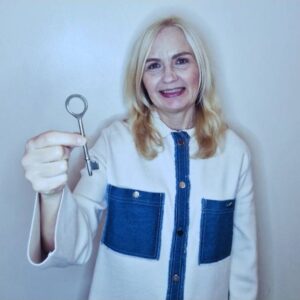
You hold the key to getting out of the OCD prison.
And never forget – it’s actually imperfection that drives evolution.

Thank you for sharing, Sam. Learning more about ourselves, when shared, helps many others; the impact of which we may never know x
Thanks for reading, lovely Dawn x
When I was little, 10 – early teens, I went through a few phases like going to wash my hands multiple times, or parting my hair with a comb. I didn’t think anything bad would happen, I just was not comfortable in my body until I did it. I admire my parents for pretending not to notice, and after puberty it didn’t happen any more. Still strange.
Glad it wasn’t anything that held you back 🙂
I think though, these days, with more awareness, parents SHOULD say something if they notice. Not easy though, those with a mental illness are often very good at hiding it.
Hi Sam,
You would have thought so, but honestly their reaction was what I needed to work through it and get over it. I didn’t feel different or odd.
From what you say it wasn’t full blown OCD. That can be long-term and devastating and requires help and support.
I’m glad you worked through it
And glad it hasn’t come back! I don’t think we’ll ever understand the human mind! Well done for working through whatever caused your behaviour
I definitely have this! Thanks for sharing your experience.
I really try to rationalise my thoughts but sometimes it’s hard!
When I write bereavement cards at work I always have to check and double check that I haven’t written everything offensive!
I never do but it still worries me!
I hope you reach out for help if you ever need it❤️